
Arctic Warbler––a long-haul, transcontinental traveler
Long ago, before sea level rise and then politics intervened, man and other animals moved freely through the Bering Strait region between Asia and North America. Today there are still a handful of migratory birds maintaining that connection, making a marathon annual journey from their nonbreeding areas in Asia and Africa to insect-rich breeding grounds in northern North America.
The tiny arctic warbler is one of those long-haul, transcontinental travelers.
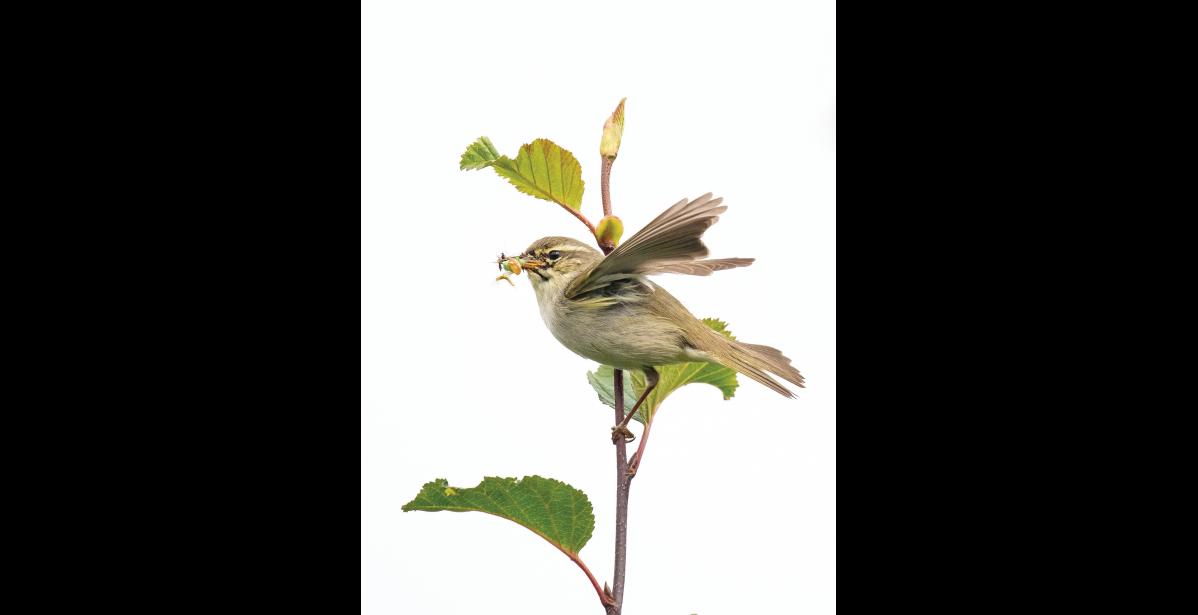
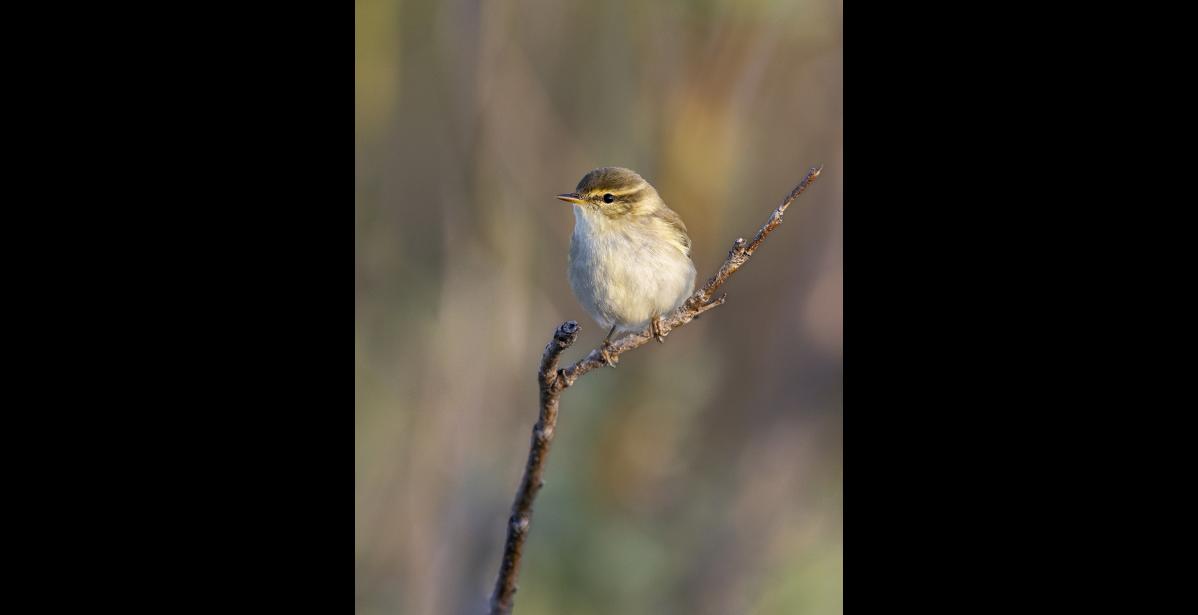
The arctic warbler is a zippy little greenish-brown songbird, and a prize that many visiting birders hope to find when they come to Nome.
Arctic warblers are in the Eurasian “leaf warbler” family of birds and are the only leaf warblers that breed in North America. Leaf warblers are cryptically colored, in contrast to our North American “wood warblers,” whose plumage generally has eye-catching colors and patterns. Otherwise, leaf and wood warblers look and behave similarly but they are not closely related.
The root of the Inupiaq and Central Yup’ik names for the arctic warbler means “gallbladder,” likely because the greenish-brown color of the bird is similar in color to that organ.
Arctic warblers breed in subarctic taiga habitats from Norway to Chukotka, Russia and across the Bering Strait into western and interior Alaska. These tiny travelers spend the nonbreeding season in southeast Asia, making a 5,000-mile journey to reach the Seward Peninsula.
This trans-Beringian migrant is a common breeder on the Seward Peninsula and is seen on St. Lawrence Island during migration, most commonly in fall.
On the Seward Peninsula, arctic warblers are most often found in medium-height willow thickets with dense, brushy ground-cover, often along streams. They also breed in forests of mixed conifers and deciduous shrubs, as in the Council area, or in cottonwood groves where tall trees are interspersed with sedge meadows and flowering plants—Pilgrim Hot Springs, for example.
Arctic warblers are one of the last songbirds to arrive in spring. A few early migrants may show up in late May, but more often during the first week of June and arrivals continue through mid-June.
Arctic warblers are talkative and energetic songbirds. They can be hard to see as they flit incessantly through dense cover, dressed in green. But their distinctive, long-lasting, repetitive trill gives them away as soon as they arrive and males begin establishing territories. For a long time, they were the only warbler I could identify by ear, thanks to their easily recognizable song.
Males arrive first and establish breeding territories with frequent song from the upper branches of shrubs. Sometimes noisy boundary disputes erupt between males with much chirping and singing at close range with ruffled feathers and wing flapping.
Newly arriving females are attracted to the songfest and respond to a prospective mate with wing rattling and fluttering. Males may feed caterpillars to the female in a courtship feeding ritual.
These warblers typically nest on mossy ground, well hidden under dense shrubs. Many nesting details are unknown. The nest, a grass dome with a side entrance, is probably built by the female.
The female usually lays five to six eggs and incubates them for about 13 days. The chicks fledge in about 12 days. Both parents feed their young before fledging and for a week or more afterwards.
By early July adults can be seen carrying insects to their young. Now, in early August, noisy family groups are still moving through the willows feeding together and staying in contact with sharp, metallic “zrik” calls. Migration will be underway by mid-August and most arctic warblers will have headed back to Asia by the end of month.
Arctic warblers are mostly insectivorous, eating a variety of beetles, mosquitoes, flies, caterpillars, insect larvae, caddisflies, grasshoppers, spiders and small snails.
They forage in near constant motion, busily searching through foliage for insects on leaves and twigs. They twitch their wings, perhaps to flush insects, and sometimes contort themselves to carefully examine vegetation for prey. These lively warblers may hover to snatch insects from foliage or catch flying insects in mid-air.
Usually, arctic warblers feed near the tops of shrubs, but occasionally they forage on the ground or along the water’s edge for small invertebrates.
The Philippines are thought to be the main overwintering destination for the arctic warblers that breed in Alaska, and some spend the nonbreeding season in other parts of southeast Asia and Indonesia.
A 2016-2019 study in Denali used tiny geolocators with light-level sensors to document the fall migration of two male arctic warblers. Both birds left Denali in early September and stopped over in southeastern Russia and China before making long flights over open ocean to wintering areas in the Philippines and the island of Palau.
Worldwide, arctic warblers are abundant and widespread. However, their numbers in Alaska are noted to have declined steeply in the last 30 years.
Habitat loss in their winter range is a concern. Increasing shrubification of their breeding areas in Alaska may benefit them initially, but as shrub height and density increases beyond a critical point, those breeding areas become unsuitable.
While I was writing this article, an arctic warbler flew into our greenhouse and became trapped. I captured the confused warbler with a net and briefly held the tiny bird in my hand, feeling its heart race wildly. It burst into the air on stiff, strong wings as I opened my hand with heartfelt wishes for a safe journey across the globe.
Click here to listen to a recording of the song of an arctic warbler: https://macaulaylibrary.org/asset/167944951