
Fuel surcharge rockets as NJUS board continues to wait on financial statements
Starting with the November bill, Nome Joint Utilities System customers will see the fuel surcharge rate more than double, General Manager John Handeland said at the NJUS board meeting last Thursday.
The utility estimates fuel surcharge will increase to 40 cents, more than double the previous cost of 18 cents. In August, Handeland estimated an increase of 30 cents.
Customers will not see the surcharge rate as a line item on their utility bill. In February, NJUS began rolling the fuel surcharge into the electricity cost, Handeland told the Nugget, because it saved staff a lot of time in the billing process.
Missing from the meeting were the 2026 budget and audits dating back to 2022; the 2021 audit has been completed.
Board members expressed emphatic frustration over the cycle of requesting the budget and audits meeting after meeting with no follow-through.
“I asked for this stuff at the last meeting or two ago and you said you’d have it,” board member Larry Pederson said.
“I did and I’ve been sick,” Handeland said.
Handeland said Travis Werba, a CPA from a contract accounting firm in Anchorage, was contacted to work virtually this week to “pick up these final pieces I have on budget.”
Handeland did not give a date when the budget would be complete, but board members urged him to put one together immediately.
“It's hard for me to sit here and listen to wanting more equipment, needing more of this, needing more of that,” Pederson said. “We don't have a budget to even say, okay, where are we going to put that? Where are we going to allocate it?”
Following the meeting the board entered an executive session to discuss matters pertaining to personnel but did not take any action.
Pederson told the Nugget that the board is working on a plan to get things corrected.
“I’m getting all kinds of comments from community members, my family members, everybody’s questioning what the hell is going on,” Pederson said. “I want people to know we’re working on a plan to get things corrected and up to speed.”
Change could come in the form of a staged transition of leadership. Handeland has been managing the utility for over 25 years and wouldn’t be easy to instantly replace, board member Derek McLarty said, but the conversation about the future of the utility has been an ongoing one for years.
“It’s no secret that John is at retirement age, Ken [Morton] is at retirement age. We’re actively looking at what’s coming at us,” McLarty said.
Chair of the NJUS board David Barron said he could not comment on any active plans regarding leadership changes in accordance with executive session rules.
Nome Common Council member Mark Johnson attended last week’s meeting thinking the budget would be presented or discussed. Johnson told the Nugget that he has been hearing many concerns from constituents over the last few months regarding transparency of the utility.
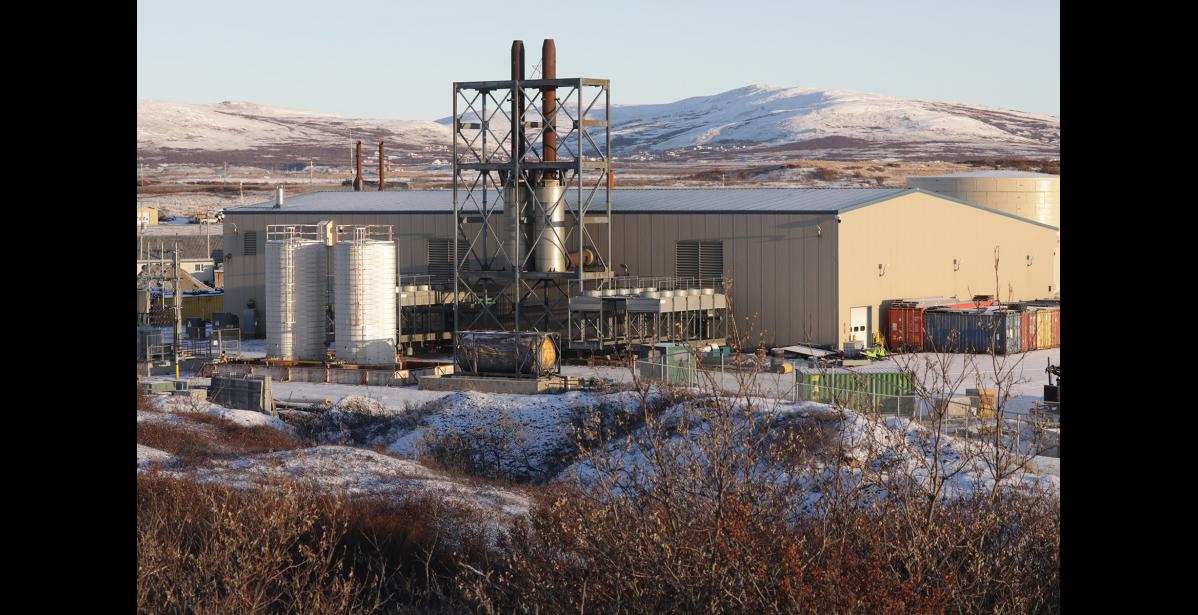
In October, the Common Council approved a resolution urging the NJU board to meet in City Hall and not at the NJUS power plant on Port Road, with the goal of inviting more participation from the public.
The 2021 audit
The Nome Nugget has obtained a copy of the 2021 audit although it has not been publicly circulated or presented to the board or the Nome Common Council yet. The 2021 audit is complete and determined to be a “clean audit.” The NJUS board has received information on the audit, but it has not yet been on the agenda of a board meeting for discussion.
The audit lists a completion date of May 6, 2026.
BDO issued a “clean” opinion on the utility’s financials, meaning the 2021 statements fairly present the financial position in accordance with the U.S. generally accepted accounting principles, a nationwide framework for companies' financials.
However, there were some things flagged by the firm and it issued a report with recommendations.
The utility’s failure to provide a timely audit report goes against government accounting standards, BDO wrote in their findings, which are in place to maintain effective internal control and ensure information is reliable and properly reported.
BDO classified the lack of financial reporting as a material weakness— a severe flaw or deficiency in a company’s internal control over financial reporting.
BDO recommended NJUS bring on additional accounting resources and develop an end-of-the-year-checklist.
Lack of timeliness contributed to a mistake that went unnoticed until BDO began working with the utility on the audit. A discrepancy with the total cash balance for 2021 was discovered, the reason being that two bank accounts closed before fiscal year 2021 were still on the utility’s general ledger.
BDO classified this as a “significant deficiency” meaning less severe as a material weakness but still warranting attention.
In a response, NJUS management said it traced the accounts back to a bond the utility participated in with the Alaska Municipal Bond Bank to construct a new power generation facility. The bond was to be repaid over 20 years. In 2014, the utility closed the bond and entered a new one with a lower interest rate. The bond reserve statement was not closed out after the bond was refinanced.
“In later reviewing accounts, this was discovered by NJUS and adjusted after consultation with auditors in 2026,” Handeland said. “The final 2014 note payment was made in 2024 to pay off the bond.”
“The CFO continues her “deep dive” at reconciliation of all accounts. Additional dedicated supplemental CPA services support have been secured on an open-ended basis,” the utility’s response states.
Missing from the 2021 audit is the Management’s Discussion and Analysis, the section of an audit that explains, from the utility’s perspective, the story behind financial performance in a given year. This typically includes descriptions of major capital projects, operational challenges and explanations of things like why the utility’s net position decreased by about $2.78 million from 2020 to 2021.
The audit was not impacted by the missing Management’s Discussion and Analysis, but BDO acknowledged its absence by stating the Governmental Accounting Standards Board’s view of it as “an essential part of financial reporting for placing the basic financial statements in an appropriate operational, economic or historic context.”
Audit backlog
A delay in audits can affect a utility's bond rating and therefore its ability to borrow money at lower interest costs. This September the utility paid off a $3.5 million loan that had a 7.5 percent interest rate.
It can also be expensive to catch up on backlogged finances. By September of 2026 the utility had spent $63,268 on audits in the past calendar year; in 2025 it spent $9,600, according to a financial report presented to the board. The utility also paid $45,103 for consultants so far this year.
Handeland and board members acknowledged the dearth of financial help at the utility for a period of time. It was also mentioned in the BDO audit.
Handeland said Werba, the Anchorage CPA, plans to travel to Nome in December to work on completing the unfinished audits dating back to 2022.
At the meeting, board member Carl Emmons said BDO is still waiting on information from the utility to complete the 2022 audit, including credit card charges. Handeland said he’s “working on that.”
Barron told the Nugget he has been in contact with BDO to see how he can move the process along.
Emmons urged Handeland to hire someone to help with audits to just get things done.
“Let’s do this as a priority. I mean, that’s what’s going to affect the cost of everything else we do,” Emmons said.
The increase in the utility’s surcharge comes from rising costs to transport fuel, driven by the war in Iran, which impacted the export of oil through the Strait of Hormuz.
In November the utility received 2,011,800 gallons of fuel, spending close to $9 million on it.
“I don’t think we’ve ever spent that,” Handeland said.
Handeland said the utility is “locked in” to a three-year contract with Crowley for price of fuel but the increase this year came from the tug fuel adjustment, a varying cost to transport the fuel.
Handeland said as soon as the fuel payment is finalized, he will submit the information on the cost to the Alaska Energy Authority and the Regulatory Commission of Alaska so the Power Cost Equalization, or PCE, can be adjusted accordingly.
The next NJUS board meeting is scheduled for December 15.
