
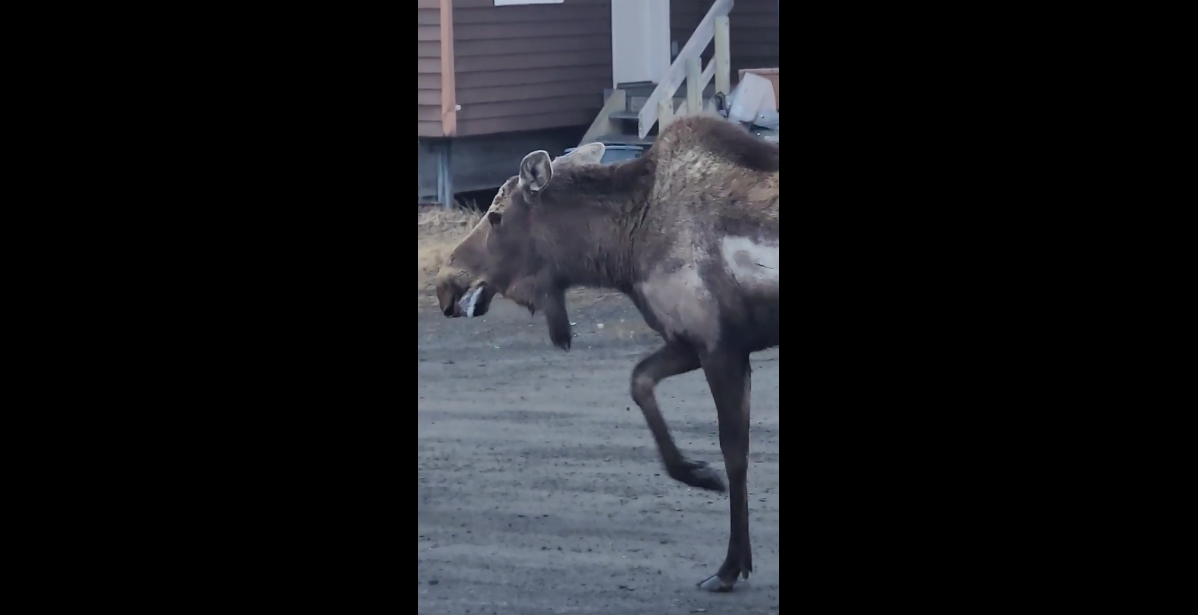
ADF&G dispatches rabid moose roaming through Teller
A moose that was killed in Teller last week had been infected with rabies, the Alaska Department of Fish and Game confirmed. This case marks the first record of rabies in a moose in the state.
Last Friday, several residents of Teller saw a cow moose wobbling through the village and behaving strangely. The animal was stumbling, drooling profusely and aggressively charging at people.
ADF&G Wildlife Veterinarian Dr. Kimberlee Beckmen advised agency staff in Nome to travel to Teller and kill the moose, both due to the animal’s aggressive behavior and its symptoms that were consistent with rabies. Tissue samples were sent to the Alaska State Virology Laboratory. Rabies virus in the brain was confirmed on Monday.
“This is the first recorded confirmation of rabies in a moose in Alaska and this moose likely contracted the rabies virus from being bitten by a rabid fox,” said Nome-based ADF&G Area Biologist Sara Germain. “While the finding of rabies in a moose is not common, it is not unexpected as we know there is currently heightened rabies activity in the Norton Sound area and rabies can impact any mammal.”
People should report strange-acting animals to ADF&G as soon as possible so that the agency can respond in a timely manner, Germain said. Unusual behaviors might include excessive salivation, aggression and a weak or wobbly appearance.
Animals like foxes that are shot and killed because they are assumed to be sick must be submitted to ADF&G—and not left out in the country—as their carcasses could pose a rabies transmission risk, Germain emphasized. Other foxes found dead should be reported to the department as well.
In the case of the moose in Teller, Germain said that ADF&G coordinated with the City of Teller to use a Bering Air chartered helicopter to sling the moose carcass to the local dump to be burned. She said that burning the carcass destroys the rabies virus and prevents transmission.
The region has already been on alert for rabies this year. ADF&G and Norton Sound Health Corporation have been collecting foxes for rabies testing. In late April, the ADF&G reported that nearly a quarter of the 61 foxes that were dispatched in Nome and the surrounding area had tested positive for rabies, representing an uptick in cases. A rabid fox also attacked a child outside Nome Elementary School in January.
The cause of the severe outbreak of rabies in this region is unknown, but experts have speculated that an abundance of lemmings in 2021-2022 may have allowed for a fox boom cycle.
The moose incident will prompt more testing.
“This was the first diagnosis of rabies in a moose in Alaska but there have been previous rabies cases in moose in South Dakota, Minnesota and Russia,” said Dr. Beckman. “Rabies diagnosis in moose is rare but very few moose are tested routinely. Only those with neurologic signs are screened for rabies along with other potential causes of brain inflammation (Chronic Wasting Disease, parasite migrations, toxicities). Due to this case, all available brain samples from wild mammals found dead or euthanized from the regions with enzootic fox rabies will be screened for rabies when feasible.”
Prevention
Rabies is nearly always fatal if not treated with the right medical care. Dog bites pose the most frequent risk of exposure to rabies for people. The best measures for rabies prevention include having pets vaccinated against rabies and keeping dogs on a leash, not letting one’s dog roam unsupervised and not leaving garbage or dog food out, which may attract foxes. Additionally, dogs should not be allowed to scavenge on wild animal carcasses as this could pose a rabies exposure risk.
Because rabies infections come with symptoms, moose or other large mammals that are behaving normally are likely not infected, Germain said. And the risk of a moose spreading rabies to a person is slim. Moose won’t spread rabies to a person or pet unless they were to bite, or a person cuts themself with a knife used to sever the head or spine of an infected animal, Germain said.
To report strange or dead animal sightings, the ADF&G area office in Nome can be reached at 907-443-2271.
The agency also encourages people to send pictures of injured wildlife and descriptions of their behavior to the he wildlife health veterinarian: dfg.dwc.vet@alaska.gov.
NSHC advises that someone bitten or scratched by an animal should wash the wound with soap and water and call their local clinic immediately for further instructions. NSHC’s Office of Environmental Health can be reached at 907-434-1659 or 907-434-0543 and NSHC’s Provider Call Line can be reached at 907-443-6411 or 844-586-8773.
The Alaska State Virology Laboratory also conducts rapid testing. The Alaska Section of Epidemiology can be reached for more information: 907-269-8000.