
Northern Shoveler––the big-billed duck
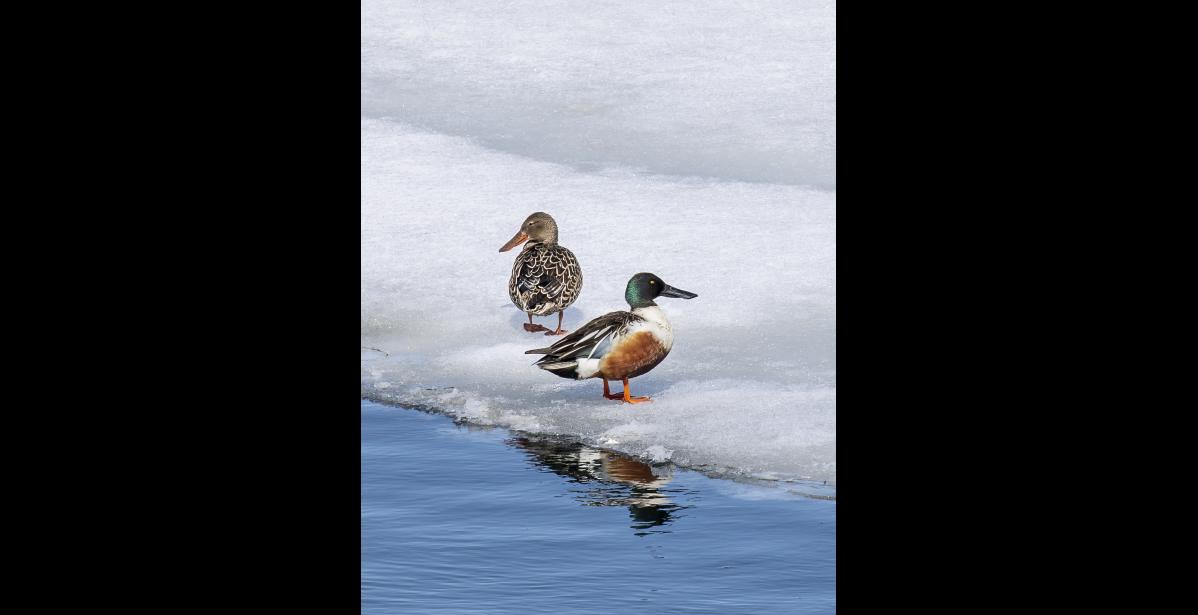
The male northern shoveler is unmistakable. With handsome, richly colored plumage and a hugely oversized bill, this duck has an elegant, yet goofy look.
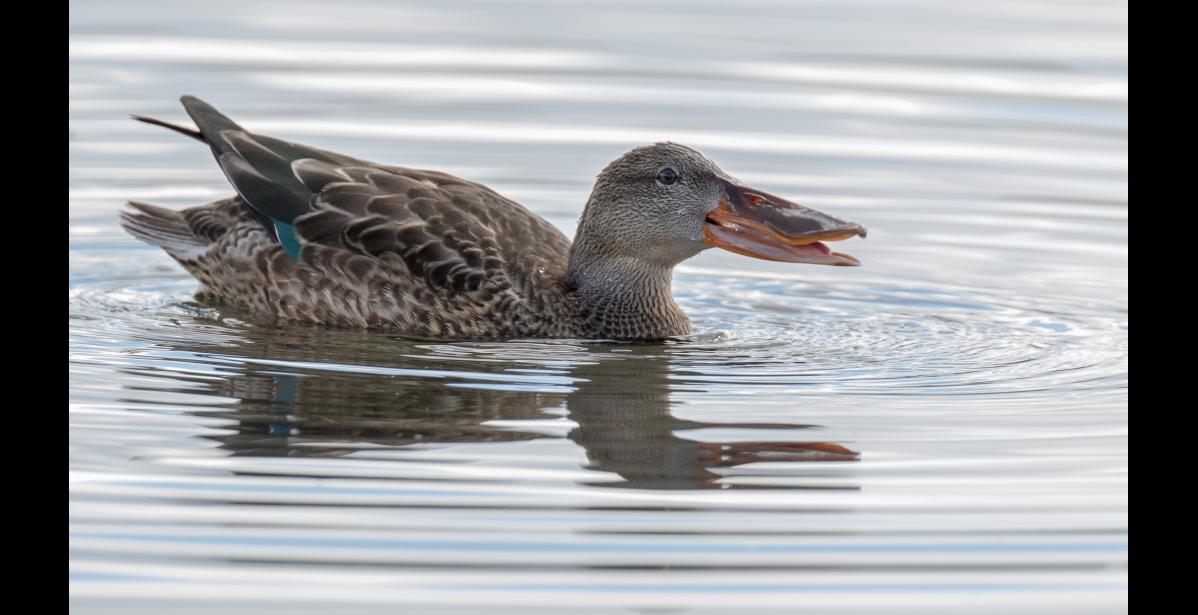
Bird bills come in all shapes and sizes to allow birds to feed on a vast variety of foods in countless unique ways. The disproportionately long and wide bill of the shoveler is specialized for skimming through the water and straining out a nutritious slurry of tiny animal and plant material. With some resemblance to a shovel, the huge bill is of course what gave the shoveler its name.
Northern shovelers are circumpolar dabbling ducks that breed in wetlands across northern North America, Europe and Asia. In North America, their breeding range extends from northern Alaska to Manitoba, Canada, and east from Washington state through the Great Plains. The core of the shoveler’s breeding range is in the Prairie Pothole region of the northcentral United States and central Canada.
On the Seward Peninsula, shovelers are not common but can be widely distributed, breeding across the peninsula’s freshwater ponds and wet meadow habitats. Open marshy areas with shallow, muddy-bottomed waters and abundant aquatic vegetation provide ideal breeding habitat. Adjacent dry meadows offer resting and nesting areas.
Shoveler numbers here fluctuate greatly from one year to the next. They are most abundant in years of prairie drought, when they are forced to bypass southerly breeding areas.
This year, I have encountered far more shovelers than usual. Pairs were particularly noticeable this spring. There have been more broods on ponds in the Nome area than I’ve seen before, and for the first time I had the pleasure of seeing a large post-breeding gathering of males on a pond at Pilgrim Hot Springs.
Most shovelers arrive in the region during the last half of May. They generally show up in pairs, having formed monogamous pair bonds, at least for the season, in winter. After arrival pairs may be seen flying together searching for a nest site, which the female selects.
During the breeding season shovelers are the most territorial of all dabbling ducks. Early in the season one may see chases across the water, or in the air, involving a territorial male in aggressive pursuit of an intruding pair searching for a territory. We sometimes see this from our window along the Nome River.
Once the hen has settled on a nest site, she makes a small depression on the ground, often in short grass within 150 feet of the water. The nest is lined with down and sometimes grass and other feathers.
The hen lays an average of nine to eleven eggs and incubates them for 22 to 25 days. Males tend to stay with their mates longer than do most male dabbling ducks. Their departure varies from the first day of incubation to hatch.
When flushed off her eggs the hen defecates on them. This has been shown to deter predators in experimental settings.
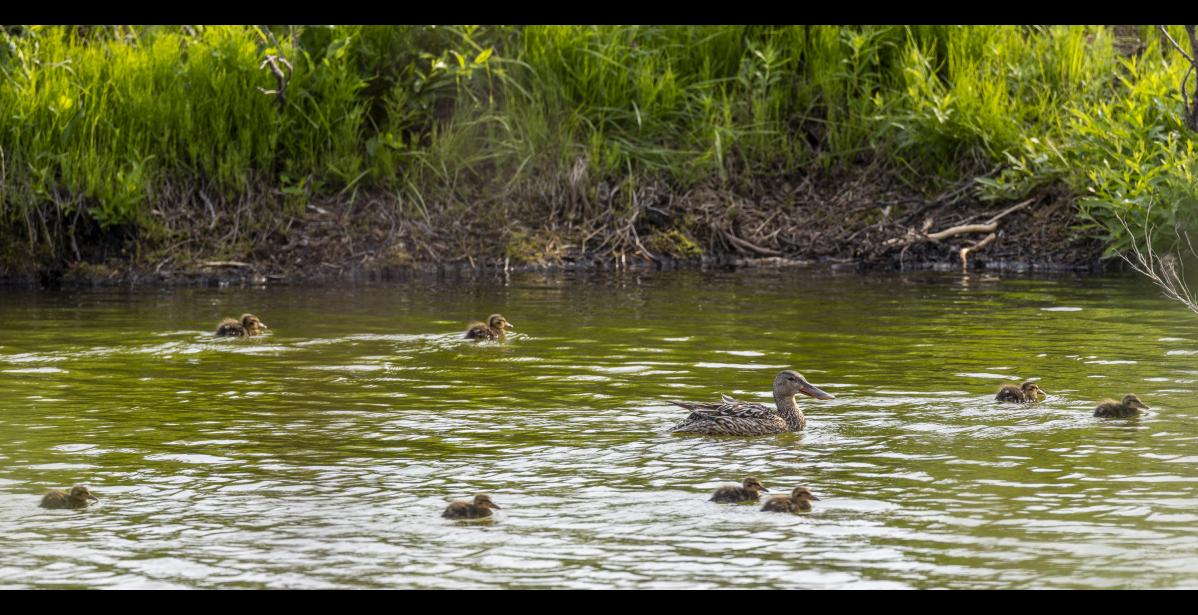
The downy young hatch synchronously with eyes open, able to walk and swim. They leave the nest soon after hatch.
The mother guides her brood to food-rich wetlands where the ducklings feed themselves on zooplankton and duckweed. Hens divert predators with dramatic wing-flapping while moving over the ground or water as though injured, luring danger away from their young.
By late June most males leave their mates to gather in flocks of 10 to 40 male shovelers, with an occasional nonbreeding female in the mix. The flocks move together between ponds, swimming and feeding peacefully in unison.
Male shovelers then become solitary and secretive during the flightless period of molt. They stay in hiding day and night, feeding little. In early to mid-August males regain flight and again form small flocks to feed before migration.
Many waterfowl such as dabbling ducks, geese and swans are filter feeders with comblike projections (lamellae) along the inside edges of their bills, but the northern shoveler takes filter feeding to the next level.
Shovelers feed with their necks extended, sweeping their huge, wide, flat bill through the shallows, taking in water at the tip of their bill and expelling it through about 400 lamellae. Most dabbling ducks have 50 to 70 lamellae.
Like a sieve, the lamellae retain the shoveler’s food—plankton, tiny aquatic invertebrates, seeds and other plant material. Spiky papillae along the sides and top of the shoveler’s tongue also help capture small food particles when filter feeding.
Shovelers seldom tip tails-up to feed in the manner of other dabbling ducks, but groups will swim in circles to stir food up from the bottom. Shovelers can walk easily on land but rarely forage there or go far from shore, though females venture to and from their nests.
By mid-August fall migration is underway. Males leave first, followed by females and young, after molting adults regain flight and young are strong on the wing.
Waterfowl surveys by the U.S. Fish and Wildlife Service indicate North American shoveler populations are relatively stable over the long term.
It is thought that the shoveler’s specialized foraging behavior may give it an advantage over other dabbling ducks in winter when food is limited. Also, by feeding mainly in the water column, shovelers avoid lead poisoning from consumption of toxic shot in bottom sediments.
It was a treat to watch a new generation of shovelers grow up and fledge from local ponds this summer. Now, most are on their way to likely wintering areas in California and along the west coast of Mexico.